This has now passed. See what is on now
Mosaics of Dahshur's Nature in Tesserae ends at Safarkhan on 17 November
Nature in Tesserae, the second Safarkhan show by the Mosaics of Dahshur atelier, closes on Tuesday 17 November. Its hand-cut marble mosaics picture Egypt's birds and animals, from ibex and gazelle to hoopoes and herons.
Safarkhan in Zamalek is into the last days of Nature in Tesserae, the second exhibition it has given the Mosaics of Dahshur atelier. The gallery reminded followers on Instagram on 11 November that the show was in its final week, and it closes on Tuesday 17 November. The works are marble mosaics, every one cut and laid by hand in a village beside the pyramids of Dahshur, south of Cairo.
The atelier is a small family workshop. Five artisans make up the team: Mohamed Abu Basil Metwalli, Basil Metwalli, Ahmed Aboul Gheit, Fatma Aboul Gheit and Rehab Aboul Gheit. They first showed at Safarkhan in April 2025 with King's Lake, a collection of Egypt's native birds that the gallery counts among the best loved exhibitions it has held in recent years. A year and a half later they are back with a wider subject.
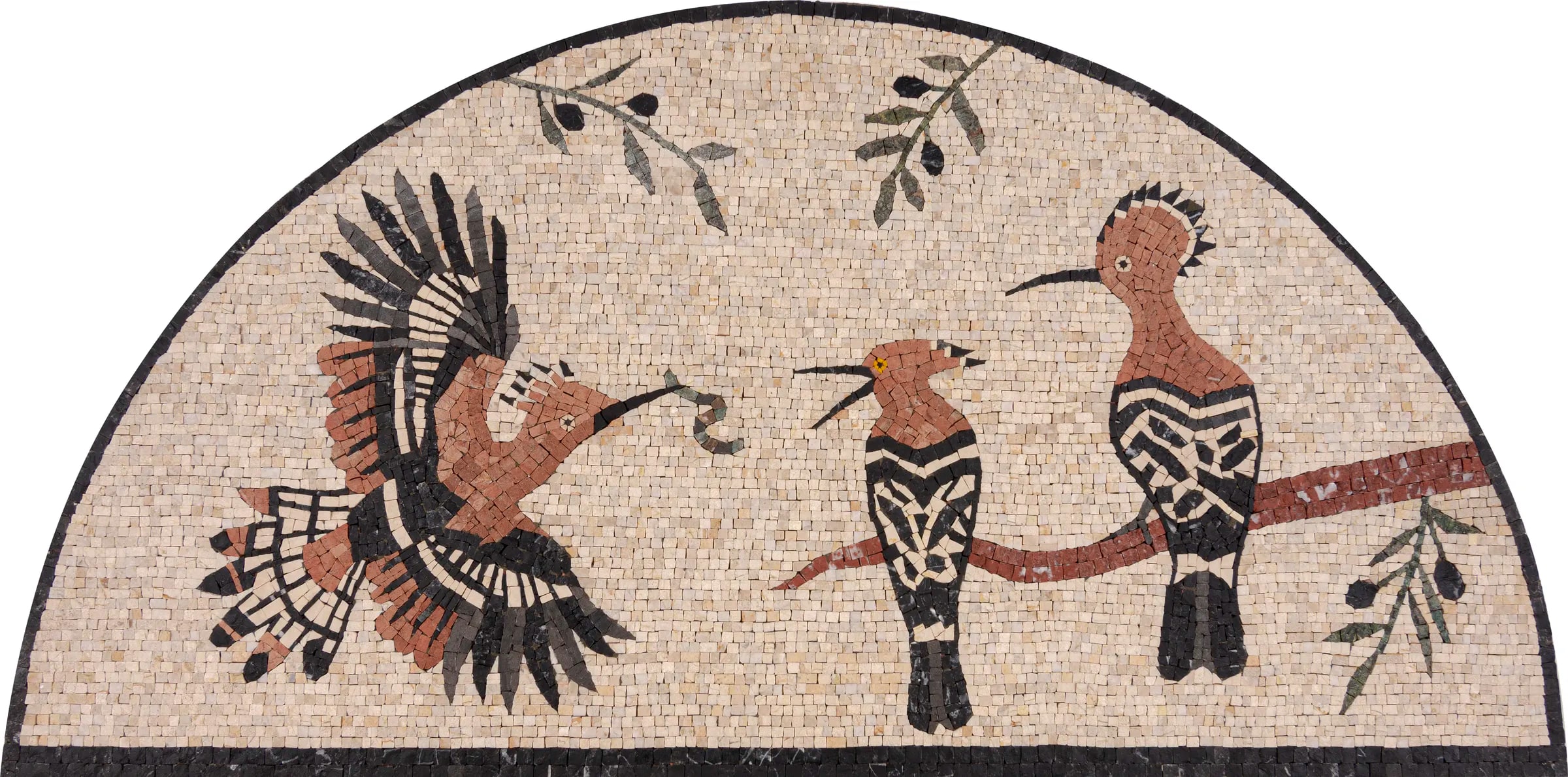
Nature in Tesserae moves from the sky to the land. The birds are still there: hoopoes squabbling on an olive branch, bee-eaters in blossom, herons by the water, and the northern bald ibis, the bird the ancient Egyptians used in writing for the spirit. Next to them are Nubian ibex resting under an acacia, hares running between doum palms, a family of genets in a tree, gazelle, oryx, giraffes bending to drink and serval cats. The gallery describes it as a journey through the plants and animals of Egypt from antiquity to now. Some of these creatures now survive only in rock art in the Eastern Desert and on tomb walls at Saqqara, a few kilometres from the workshop; others still live in the fields and canals around Dahshur.
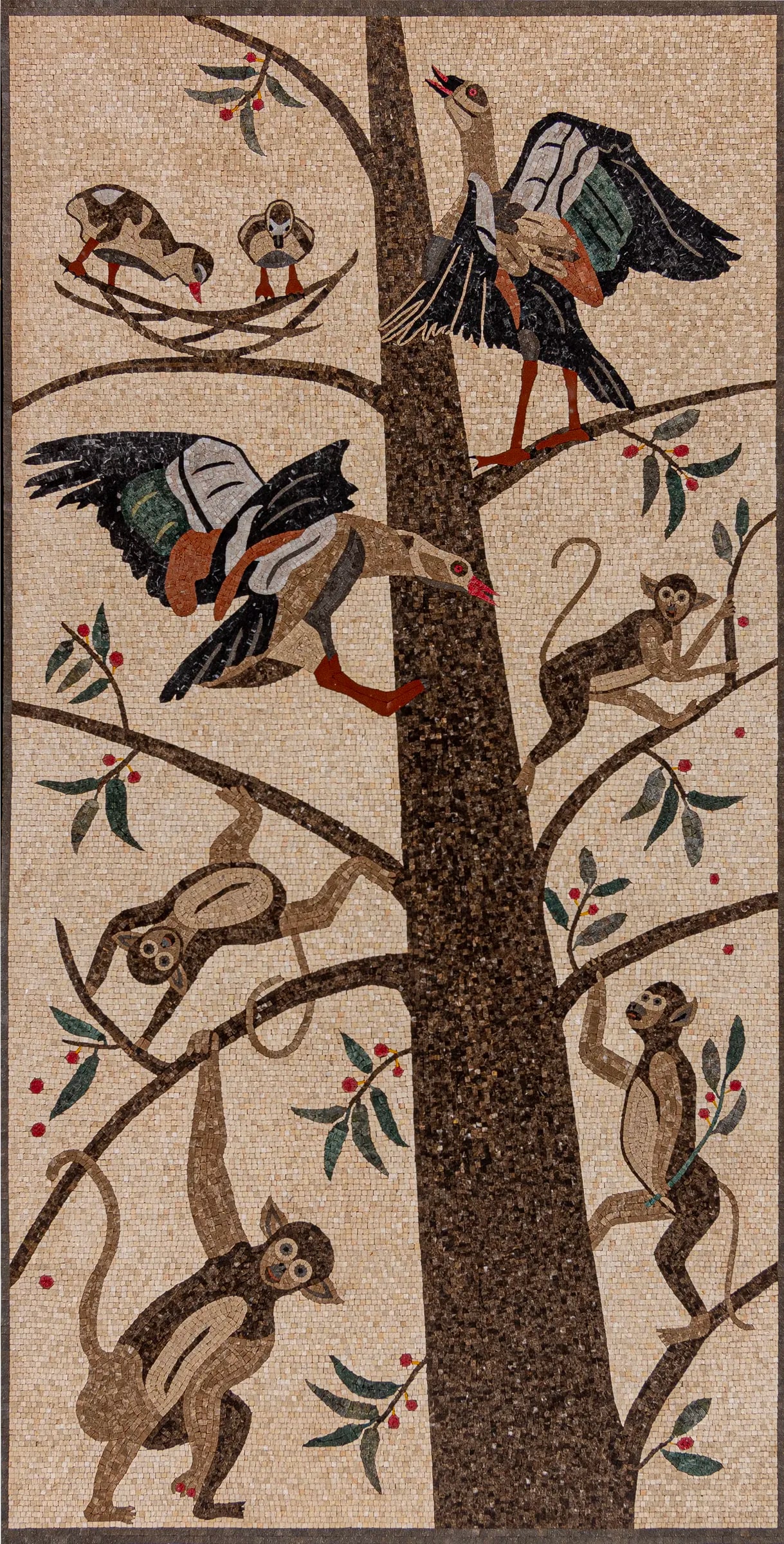
The piece Safarkhan picked for its Instagram post shows how playful the work can be. Monkeys and Egyptian Geese, a marble mosaic of 180 by 90 centimetres by Basil and Mohamed Metwalli, has a gander arriving just in time to chase a troop of monkeys away from a nest of goslings high in a tree.
The craft itself is old. A tessera is one small hand-cut piece of stone, and the Dahshur artisans shape theirs with simple tools, following a method that started in Alexandria in the third century BC. Unlike the later Roman style, which leaves visible gaps between the pieces, this Egyptian way fits the marble tightly together. The atelier was founded by the American art historian Charlotte Sullivan, who has spent the autumn to spring months in Dahshur for almost five decades and trained the artisans to make original designs drawn from their own heritage and village life.
There is a sadder thread too. The seasonal water of the King's Lake, Birket el Malik, used to spread from the farmland to the foot of the Bent, Black and Red Pyramids, but it last came back in 2015, and Sullivan has said that fewer birds have come to the area since. Safarkhan calls the new collection a quiet inventory of what Egypt could lose, and says it presents the exhibition entirely in support of the atelier and its artisans, a project that keeps the craft alive and gives the village a living.
Safarkhan is at 6 Brazil Street in Zamalek. The gallery opens Monday to Saturday from 11am to 8pm and on Friday from 1pm to 8pm, and it is closed on Sunday, so the last two chances to see the show are Monday 16 and Tuesday 17 November. The gallery has not mentioned an entry fee. The works can be browsed and enquired about on Safarkhan's website, and the gallery's numbers are on its contact page for anyone who wants to ask about a piece before the show comes down.